


Introduction: Why Potassium Humate Matters in Modern Farming
In the pursuit of sustainable and high-yield agriculture, farmers and agronomists are constantly seeking natural solutions that improve soil health while boosting crop productivity. Potassium humate has emerged as one of the most effective organic soil amendments, offering a powerful combination of nutrient delivery and soil structure improvement.
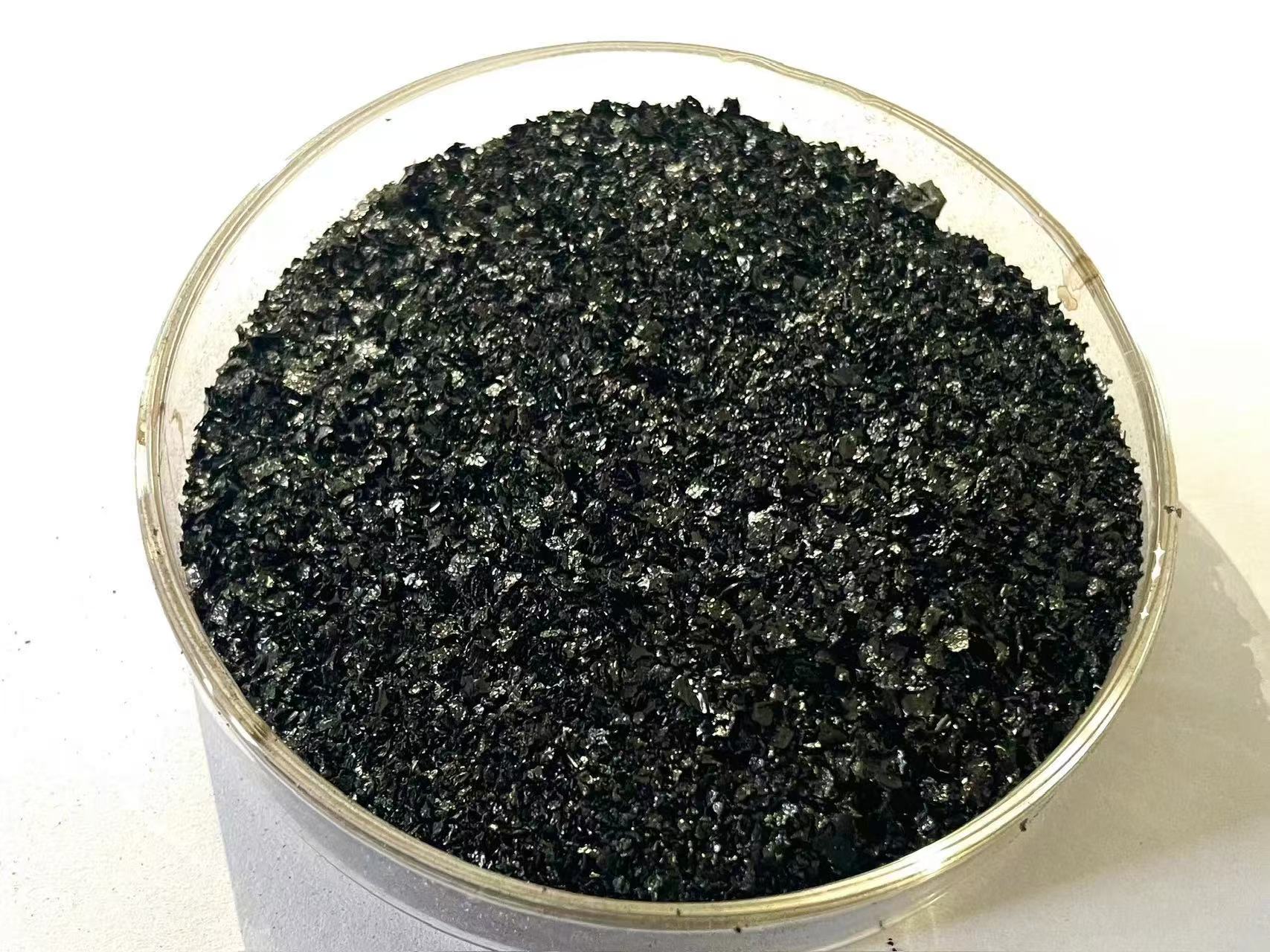
Derived from humic substances—natural organic compounds formed through the long-term decomposition of plant and animal matter—potassium humate is the potassium salt of humic acid. Its unique chemical structure enables it to interact positively with soil minerals, enhance water retention, and promote robust root development. For farmers transitioning from chemical-heavy practices to organic or regenerative systems, potassium humate serves as a bridge toward healthier, more resilient farmland.
This article explores how potassium humate functions in agricultural systems, its key benefits for soil improvement and organic fertilization, and practical guidance for incorporating it into your farming routine.
What Is Potassium Humate?
Understanding Humic Substances
Humic substances are naturally occurring organic materials found in soil, peat, coal, and other decomposed organic deposits. They consist of three main fractions:
•Humic acid– soluble in alkaline conditions, the primary component used to produce potassium humate
•Fulvic acid– smaller molecules, soluble at all pH levels, excellent chelating agents
•Humin– insoluble, highly stable, contributes to long-term soil structure
Potassium humate is manufactured by extracting humic acid from high-quality raw materials—most commonly leonardite or weathered coal—and neutralizing it with potassium hydroxide. The resulting product is water-soluble, making it easy to apply through irrigation systems (fertigation) or foliar sprays.
Key Properties of Potassium Humate
Property | Benefit |
High cation exchange capacity (CEC) | Binds and releases nutrients efficiently |
Rich in functional groups | Chelates micronutrients, prevents leaching |
Large molecular structure | Improves soil aggregation and aeration |
Natural pH buffering | Stabilizes soil acidity/alkalinity |
Biologically active | Stimulates beneficial microbial populations |
Core Applications of Potassium Humate in Agriculture
1. Soil Structure and Physical Improvement
One of the most significant advantages of potassium humate is its ability to improve soil physical properties. In compacted or degraded soils, the large molecular structure of humic substances acts as a binding agent, creating stable soil aggregates. This leads to:
•Better aeration: Roots require oxygen for respiration; well-structured soil allows air to penetrate deeper.
•Enhanced drainage: Water moves freely through aggregated soils, reducing the risk of root rot and waterlogging.
•Reduced erosion: Stable soil aggregates resist wind and water erosion, preserving topsoil.
Studies have shown that soils treated with potassium humate exhibit up to 30% improved water infiltration rates compared to untreated control plots. This is particularly valuable in regions facing irregular rainfall patterns or drought stress.
2. Nutrient Retention and Efficient Delivery
Chemical fertilizers often suffer from low utilization rates—nitrogen can volatilize, phosphorus can become fixed in soil, and micronutrients may leach away before plants absorb them. Potassium humate addresses these inefficiencies through multiple mechanisms:
•Cation exchange: The negatively charged functional groups in potassium humate attract positively charged nutrient ions (K+, Ca2+, Mg2+, NH4+), holding them in the root zone for gradual release.
•Chelation: Humic substances wrap around metal micronutrients (iron, zinc, manganese, copper), keeping them soluble and bioavailable.
•Reduced leaching: By stabilizing nutrients in the topsoil layer, potassium humate minimizes environmental runoff and groundwater contamination.
Research indicates that combining potassium humate with standard NPK fertilizers can improve nitrogen use efficiency by 15–25% and phosphorus uptake by 20–40%, depending on soil type and crop.
3. Organic Fertilizer Enhancement and Compost Activation
For organic farming systems, potassium humate is compatible with compost, manure, and biofertilizers. When added to compost piles, it:
•Accelerates microbial decomposition
•Reduces odor and ammonia loss
•Enriches the final product with stable humus
In field applications, mixing potassium humate with organic fertilizers enhances their performance by improving nutrient mineralization rates and extending the release window. This means crops receive a steady nutrient supply rather than a single burst followed by decline.
4. Plant Growth Stimulation and Stress Resistance
Beyond soil-level benefits, potassium humate directly influences plant physiology. When applied as a foliar spray or soil drench, it stimulates:
•Root elongation and branching: Enhanced root systems access more water and nutrients.
•Chlorophyll synthesis: Improved nitrogen availability leads to greener, more vigorous foliage.
•Enzyme activation: Metabolic processes involved in photosynthesis and respiration become more efficient.
•Abiotic stress tolerance: Crops treated with potassium humate show greater resilience to salinity, drought, and temperature extremes.
Field trials on wheat and corn have documented yield increases of 8–15% when potassium humate was integrated into standard fertilization programs, even without increasing total nutrient input.
Best Practices for Applying Potassium Humate
Application Methods
Method | Rate (per hectare) | Timing | Best For |
Soil drench | 5–10 kg | Pre-planting or early growth | Row crops, vegetables |
Fertigation | 2–5 kg per season | Split across growth stages | Orchards, greenhouse crops |
Foliar spray | 0.5–1 kg in 300–500 L water | Vegetative stage, flowering | Quick correction, stress relief |
Seed treatment | 0.1–0.2% solution | Before sowing | Germination boost, early vigor |
Compatibility Notes
•Potassium humate is compatible with most NPK fertilizers, micronutrient solutions, and biological inoculants.
•Avoid mixing with strongly acidic solutions (pH < 3) or calcium-rich inputs in the same tank, as precipitation may occur.
•For optimal results, conduct a jar compatibility test before large-scale mixing.
Frequency and Seasonal Strategy
Most growers achieve best results by applying potassium humate 2–4 times per growing season:
1.Pre-planting: Soil conditioning and root zone preparation
2.Vegetative stage: Support rapid biomass accumulation
3.Flowering/fruit set: Maximize nutrient demand during reproductive phases
4.Post-harvest (perennial crops): Restore soil organic matter and prepare for dormancy
Scientific Evidence and Industry Recognition
Multiple peer-reviewed studies support the efficacy of potassium humate in agricultural systems:
•A 2019 meta-analysis published in Agronomy reviewed 127 trials and concluded that humic substances, including potassium humate, consistently improved root density and nutrient uptake across diverse soil types (Source: Agronomy, 2019, Vol. 9, Issue 5).
•Research from the University of Queensland demonstrated that potassium humate applications increased available phosphorus by 35% in alkaline calcareous soils, where phosphorus fixation is typically severe (Source: University of Queensland Soil Science Division, 2021).
•A three-year field study in northern China showed that tomato yields increased by 12.4% and fruit sugar content improved when potassium humate was combined with reduced chemical fertilizer rates (Source: China Agricultural University Journal, 2020).
These findings align with the growing global trend toward sustainable intensification—producing more food with fewer environmental costs.
Conclusion: Building Soil Health for Future Harvests
Potassium humate represents a scientifically validated, practically proven tool for modern agriculture. Whether your goal is rebuilding degraded soil, maximizing fertilizer efficiency, or transitioning toward fully organic production, potassium humate delivers measurable results at the soil and plant level.
By improving physical soil structure, enhancing nutrient retention, stimulating microbial life, and strengthening plant resilience, potassium humate supports the fundamental principle that healthy soil grows healthy crops. It is not merely an input—it is an investment in the long-term productivity and sustainability of your land.
About Maxfieldcorp: Your Trusted Partner in Humate Excellence
At Maxfieldcorp, we understand that the quality of potassium humate begins at the source. Our company is headquartered in Shizuishan, Ningxia, China—one of the world’s premier regions for humic acid raw material reserves. This strategic location gives us direct access to high-grade leonardite deposits, the foundation of superior humic products.
We operate a modern, fully automated production facility that ensures consistent extraction, purification, and quality control at every stage. From raw material processing to final packaging, our manufacturing systems meet international standards for purity, solubility, and performance.
To serve our global partners efficiently, Maxfieldcorp maintains an international trade office in Jiangsu Province, staffed with experienced professionals who coordinate logistics, documentation, and customer support across time zones.
Our mission is straightforward: to supply the global agricultural market with premium-quality potassium humate and humic acid products that help farmers improve yields, restore soil health, and build sustainable operations. Whether you require bulk shipments for large-scale farming or customized formulations for specialized crops, Maxfieldcorp is committed to delivering reliability, consistency, and value.
Contact Maxfieldcorp today to learn how our potassium humate solutions can enhance your soil and strengthen your harvests.

