


AI Image Prompt (copy to Wanxiang/Jimeng): > A professional agricultural photograph showing potassium humate granules being applied to rich dark soil in a modern farm field, with green crop seedlings in the foreground, golden sunlight, scientific equipment like a soil testing kit visible, clean and vibrant colors, photorealistic style, 800x400px composition
Introduction
Every season, farmers face the same frustrating cycle: applying more synthetic fertilizer, yet watching soil quality decline year after year. Compaction increases, water retention drops, and crop yields plateau despite rising input costs. If this sounds familiar, you’re not alone—and the solution may not be adding more chemicals, but restoring what the soil has lost.
Potassium humate is emerging as one of the most effective organic soil amendments in modern agriculture. Unlike conventional fertilizers that feed plants directly, potassium humate works by rebuilding the soil itself—improving structure, enhancing nutrient availability, and reviving microbial life. For growers seeking sustainable, long-term productivity, understanding how potassium humate functions is no longer optional.
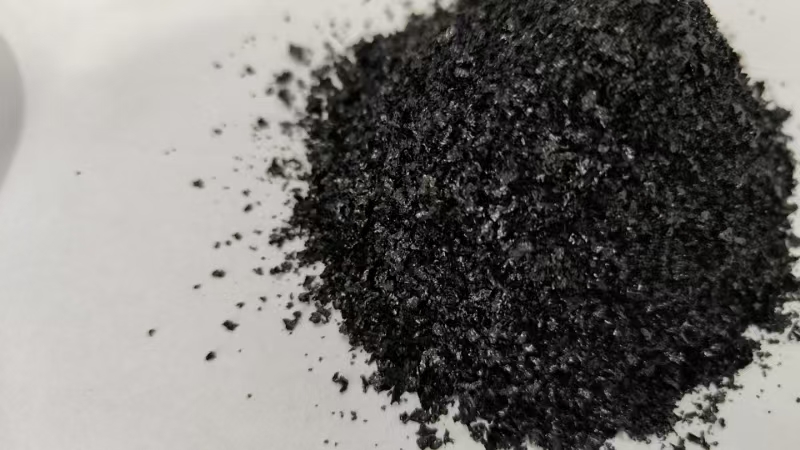
What Is Potassium Humate — Expert Explanation
Potassium humate is the potassium salt of humic acid, a naturally occurring organic substance formed through the long-term decomposition of plant and animal matter. Chemically, humic acid is characterized by its complex molecular structure containing aromatic rings, phenolic groups, and abundant carboxyl (-COOH) and hydroxyl (-OH) functional groups. These functional groups are what give potassium humate its remarkable capacity for ion exchange and chelation.
According to data published by the International Humic Substances Society (IHSS), soils with adequate humic substance content demonstrate significantly improved cation exchange capacity (CEC)—often by 20–40% compared to depleted soils. Potassium humate delivers this benefit in a water-soluble, plant-available form that can be applied through irrigation systems or soil dressing.
The key quality indicators for potassium humate products include humic acid content (typically 50–70% in high-grade products), potassium oxide (K₂O) percentage (usually 8–12%), and water solubility rates (premium products exceed 95%).
How Potassium Humate Works — Technical Deep Dive
Enhanced Soil Aggregation
Potassium humate binds soil particles into stable aggregates through its long-chain molecular structure. This creates a crumb-like soil texture that resists compaction and erosion while improving root penetration. Research from agricultural extension programs consistently shows that soils treated with potassium humate maintain better tilth under repeated mechanical stress.
Nutrient Chelation
The carboxyl and phenolic groups in potassium humate form stable complexes (chelates) with essential micronutrients including iron, zinc, manganese, and copper. This chelation prevents nutrient lock-up in alkaline soils and makes trace elements available for plant uptake throughout the growing season.
Water Retention
Potassium humate can increase soil water-holding capacity by 5–10%, according to peer-reviewed agronomic studies. In drought-prone regions, this translates directly to reduced irrigation frequency and improved crop resilience during dry spells. The humic gel-like structure absorbs water and releases it gradually to root zones.
Microbial Activity Boost
Potassium humate serves as a carbon source and habitat for beneficial soil microorganisms. Application has been shown to increase populations of nitrogen-fixing bacteria and mycorrhizal fungi—organisms that form symbiotic relationships with crop roots and enhance overall nutrient cycling efficiency.
Application Method Recommended Rate Expected Outcomes Best Practices
-------------------------------- ------------------------------------- -------------------------------------------- --------------------------------------------
Soil dressing (broadcast) 15–30 kg per hectare Improved soil structure within 1–2 seasons Incorporate into topsoil; apply pre-planting
Fertigation (drip irrigation) 5–10 kg per hectare per application Rapid nutrient uptake; 10–15% yield Dissolve fully; apply during active growth
increase potential stages
Seed treatment 0.5–1% solution soak Enhanced germination; stronger seedling vigor Soak seeds 6–12 hours before planting
Foliar spray 0.3–0.5% solution Direct micronutrient delivery; stress Spray during early morning or late afternoon
recovery
Note: Actual results may vary based on soil conditions, climate, crop variety, and existing soil organic matter levels. Always conduct a soil test before determining application rates.
Field experience across multiple growing seasons suggests that potassium humate delivers the most consistent results when applied as part of an integrated soil management program rather than as a standalone intervention.
Industry Credentials & Trust Signals
When evaluating potassium humate suppliers, growers should verify product compliance with established quality benchmarks. Reputable manufacturers provide certificates of analysis documenting:
• Humic acid content: Minimum 50% (dry basis)
• Potassium oxide (K₂O): 8–12% for standard agricultural grades
• Water solubility: ≥95% for fertigation-grade products
• pH range: 9–11 (alkaline, typical for potassium salts)
• Heavy metal limits: Below regulatory thresholds per GB/T 33891 or equivalent standards
Potassium humate raw material quality is heavily influenced by sourcing geography. Regions with high-quality lignite and leonardite deposits—such as Ningxia in northwestern China—are recognized globally as core production bases for premium humic acid raw materials.
FAQ
Q1: How is potassium humate different from chemical potassium fertilizer? A: Chemical potassium fertilizers (e.g., potassium chloride) provide K⁺ ions directly but do nothing for soil structure. Potassium humate supplies potassium while simultaneously improving soil organic matter, water retention, and microbial activity.
Q2: Can I mix potassium humate with other fertilizers or pesticides? A: Generally yes, but avoid mixing with strongly acidic products or calcium-rich formulations, as precipitation may occur. Always perform a jar compatibility test before tank-mixing.
Q3: How soon will I see results after applying potassium humate? A: Foliar and fertigation applications often show visible improvements within 2–3 weeks. Soil structure benefits from broadcast applications typically become measurable after one full growing season.
Q4: Is potassium humate safe for organic farming? A: Yes—potassium humate is naturally derived and widely accepted under organic certification frameworks, though growers should confirm with their specific certifying body.
Q5: What storage conditions does potassium humate require? A: Store in a cool, dry place away from direct sunlight. Powder and flake forms have a shelf life of 24+ months when properly sealed.
Conclusion & Company Integration
Modern agriculture demands solutions that work with natural systems rather than against them. Potassium humate represents precisely that approach—rebuilding soil fertility from the ground up through verified scientific mechanisms rather than masking deficiencies with increasing chemical inputs.
For growers and distributors seeking a reliable potassium humate supply partner, sourcing from established production regions matters. Maxfield Corporation, headquartered in Shizuishan, Ningxia—one of China’s core humic acid raw material production bases—operates modern automated production facilities that ensure consistent product quality batch after batch. With an international trade department based in Jiangsu serving global partners, Maxfield Corporation is dedicated to providing high-quality potassium humate products and professional agricultural support worldwide. Visit http://m.maxfieldcorp.com/ to explore our product specifications, request samples, or discuss customized formulation requirements for your regional agricultural needs.

